Solder, Customize, Repeat: Inside the Taiwan-Fueled American Vape Modding Scene
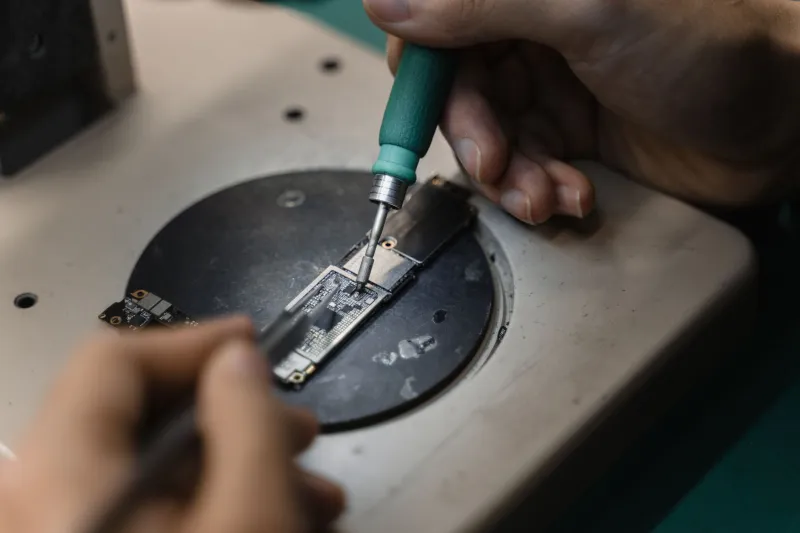
Somewhere in a garage in Denver, a guy named Marcus is hunched over a workbench with a soldering iron, a pair of magnifying glasses, and a chip board sourced from a supplier in Taoyuan. He's building a custom regulated mod from scratch — not because he couldn't buy one off a shelf, but because building it himself means every component, every spec, every aesthetic choice is his.
This is the American vape modding scene in 2024. It's louder, more skilled, and more connected to Taiwanese manufacturing culture than most people outside the hobby realize.
What "Modding" Actually Means Today
The word "modding" covers a pretty wide range of activity in the vaping world. At the entry level, it's stuff like swapping panels on a box mod, adding custom drip tips, or doing a basic coil build on a rebuildable atomizer. At the high end, it's full mechanical mod fabrication — machining your own tubes, wiring custom chip boards, designing enclosures from raw materials.
What's changed in the last few years is how accessible the middle ground has become. The gap between "I want to personalize my setup" and "I'm building competition-grade hardware" has shrunk dramatically, and Taiwan's parts ecosystem is a significant reason why.
Taiwanese suppliers — many of them operating through platforms that ship internationally — have made it possible to source high-tolerance machined components, quality 510 connectors, MOSFET boards, and custom panel blanks at prices that don't require a serious financial commitment. The barrier to entry for a first serious build is lower than it's ever been.
The Taiwan Connection: Why It Matters
It's worth understanding why Taiwan specifically has become such a key node in the global modding supply chain.
Taiwan's manufacturing infrastructure is built around small and medium-sized factories with high CNC machining capability and a culture of taking small custom orders. In the US or Europe, getting a run of 50 custom-machined aluminum panels made to spec would be either cost-prohibitive or logistically complicated. In Taiwan's industrial zones, it's a Tuesday afternoon job for dozens of shops that have been doing precision work for decades.
That infrastructure, originally built around consumer electronics and medical device manufacturing, translates almost perfectly to the needs of the vape modding community. Tight tolerances, diverse material options (brass, copper, aluminum, stabilized wood composites), and a willingness to work with individual buyers rather than only corporate clients — it's a natural fit.
American modders have figured this out, and the community knowledge about which Taiwanese suppliers to use, how to communicate specs across a language barrier, and how to navigate import logistics has become a genuine form of shared expertise within the hobby.
Real Modders, Real Builds
We reached out to a few members of active US modding communities to get a sense of what people are actually building and what Taiwan-sourced parts are making possible.
Jamila, a mechanical engineer based in Atlanta, started modding about three years ago. Her current project is a copper squonk mod with a custom-engraved panel she designed herself and had produced by a Taiwanese fabricator she found through a vaping forum. "The quality of what came back was genuinely better than I expected," she said. "The engraving depth was consistent, the finish was clean. I've had stuff made locally that wasn't as good."
Then there's Derek in Seattle, who's been building coils competitively for two years. He sources his Kanthal and Ni80 wire from a Taiwanese supplier and says the consistency between spools — something that matters a lot when you're trying to match resistance across a dual-coil build — is noticeably better than what he was getting from US-based alternatives at the same price point.
Neither of these people would describe themselves as advanced engineers. They're hobbyists who got curious, found a community, learned some skills, and discovered that quality materials were available to them without a commercial purchasing account or a massive minimum order.
The Skills Stack: What You Actually Need to Get Started
If you're curious about getting into modding, the skill requirements are more accessible than the aesthetic of the hobby might suggest.
Basic coil building is the natural starting point. You need wire, a coil jig (inexpensive), a pair of ceramic tweezers, and an ohm reader. The technique takes an afternoon to learn reasonably well and a few weeks to get consistent. There are dozens of solid tutorial resources online, and the vaping community on Reddit has multiple dedicated subreddits where beginners get genuinely helpful feedback.
Panel and aesthetic customization doesn't require any electrical knowledge at all. Swapping panels, adding custom drip tips, and doing basic engravings or wraps is pure craft work — patience and attention to detail matter more than technical background.
Regulated mod building is where electronics knowledge becomes relevant. Understanding basic circuit concepts, being comfortable with a soldering iron, and knowing how to read a chip board spec sheet are the core requirements. It's learnable, but it's a real commitment.
Community as Infrastructure
What makes the American modding scene work isn't just access to parts — it's the knowledge network that's grown up around the hobby. Discord servers, subreddit communities, YouTube channels, and local vape meetups have created an environment where someone new to modding can get real guidance from people who've already made the mistakes.
Taiwanese manufacturers and suppliers have, perhaps unintentionally, become part of this community infrastructure. Several Taiwanese parts suppliers now maintain English-language social media presences specifically because they've recognized the American hobbyist market as a meaningful customer segment. Some have gone further, creating tutorial content and spec documentation in English to reduce the friction of working with international buyers.
That kind of engagement — a supplier in Taichung making content to help a hobbyist in Columbus understand how to use their components — is genuinely new, and it's accelerating the growth of the scene on both ends.
Where It's Going
The modding community is growing, and the tools are only getting better. More Taiwanese suppliers are entering the international market, CAD design software has made custom part specification more accessible to non-engineers, and the community knowledge base keeps expanding.
For American vapers who've been curious about going deeper than a stock setup, there's never been a better time to explore. The hardware is there. The community is there. And a lot of the best components have a return address somewhere in Taiwan.